
How to Use a Pizza Oven: A Calm, Step-by-Step Guide for Beginners
Affiliate Disclosure
This page contains affiliate links. As an Amazon Associate, Pizza Oven Zen may earn a commission on qualifying purchases at no extra cost to you. Our reviews and recommendations are editorially independent.
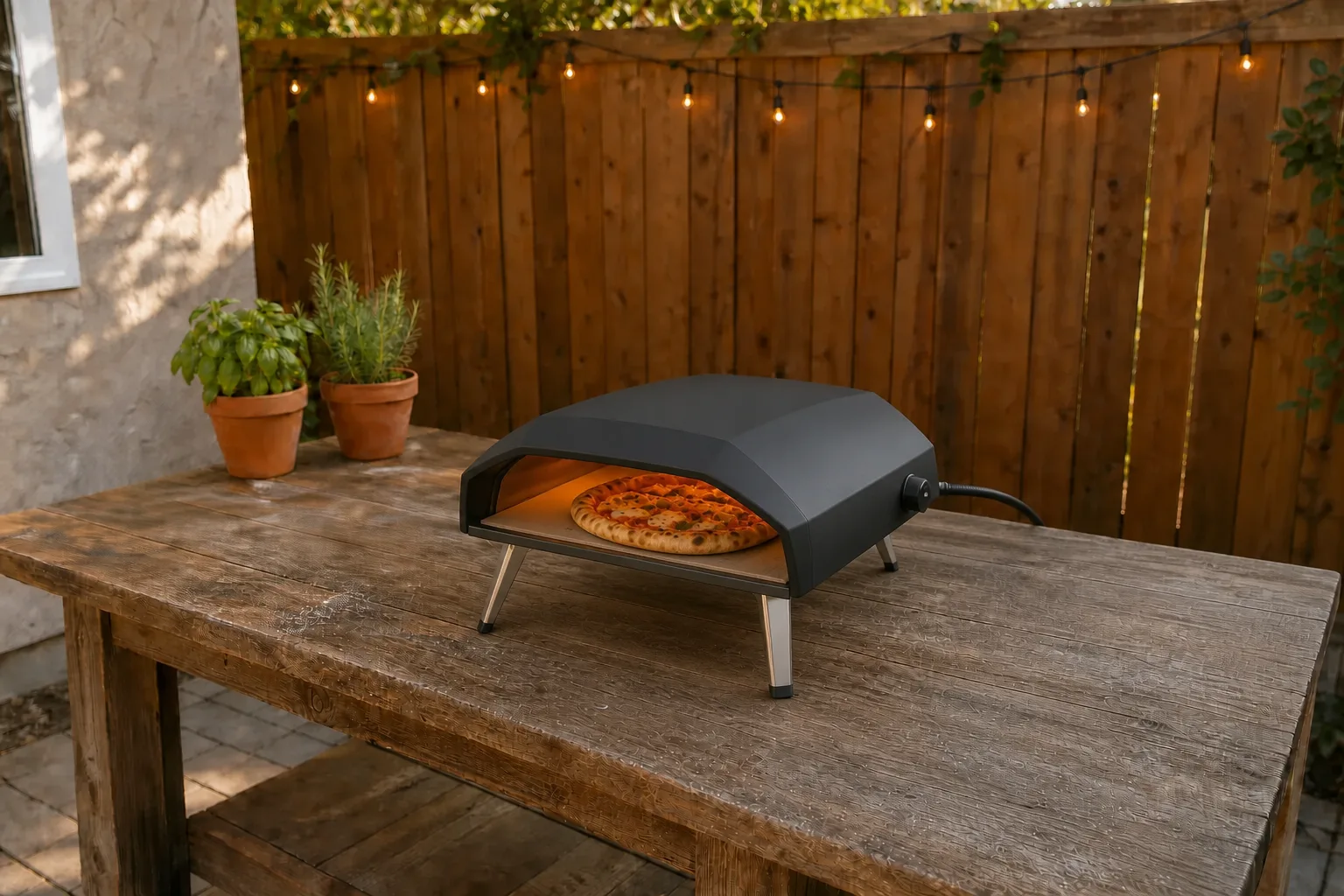
Step 1: Preheat Fully — 15 to 20 Minutes, No Shortcuts
This is the step most beginners rush, and it's the one that matters most. Light your oven and let it run for a full 15 to 20 minutes before the first pizza goes in. Set a timer on your phone so you're not tempted to peek early. The flame heats the air fast, but the stone — the flat baking surface inside — needs time to soak up heat all the way through, like a sponge filling with water. A hot stone is what gives you that crisp, golden bottom crust.
How do you know it's ready? The gold standard is an infrared thermometer — a little point-and-click gadget that reads the stone's temperature from a safe distance. You're looking for around 750°F (400°C) for classic thin-crust pizza, or a gentler 600°F if you like a slower, more forgiving bake. No thermometer? Wait the full 20 minutes and trust the clock. I know it feels like forever when you're hungry, but a cold stone gives you a pale, floppy bottom. And nobody wants a pizza with a soggy bottom — that's a crust cause for concern.
Step 2: Flour the Peel So Your Pizza Can Slide
While the oven heats, get your peel ready. A peel is that big flat paddle you use to slide the pizza in and out — think of it as the pizza's skateboard. Dust it with a light, even layer of flour or semolina (a coarse, sandy flour that works like tiny ball bearings). This is what lets your pizza glide off instead of gluing itself down.
Now build your pizza right on the floured peel — don't build it on the counter and try to move it later. Work fairly quickly, because dough sitting on a peel starts to stick after a few minutes. Before you head to the oven, do the shake test: give the peel a gentle back-and-forth wiggle. If the pizza scoots freely, you're ready. If it's stuck, lift the edge and puff a little more flour underneath. I always say the peel and the pizza need to be on good terms — otherwise things get a little too attached.
Step 3: Launch with Confidence — Hesitation Is the Enemy
Here's the moment that makes new pizza makers nervous, so take a breath. Slide the peel into the oven so the front edge of the pizza is near the back of the stone. Then tilt the peel down slightly and pull it back with one smooth, confident motion — like pulling a tablecloth out from under the dishes, but much easier. The pizza slides off and lands right where you want it.
The secret is committing to the move. A slow, timid pull is what causes toppings to slide and dough to fold. One medium-speed pull, done with purpose, works nearly every time. And if your first launch turns into a calzone-shaped surprise? Welcome to the club — we have jackets. Close the oven, let it cook anyway, and call it a rustic special. Every backyard pizza dad has a folded-pizza story. It kneads no explanation.
Step 4: Turn Every 20 Seconds, Like a Merry-Go-Round
Most home pizza ovens have their flame at the back or along one side, which means one edge of your pizza cooks much faster than the rest. Your job is simple: every 20 seconds or so, turn the pizza about a quarter of the way around. Think of it like a merry-go-round — every part of the crust gets its turn facing the fire.
The easiest tool for this is a small turning peel — a little round paddle made for spinning pizzas in place. But a regular peel works fine for beginners: slide it under, pull the pizza toward the mouth of the oven, rotate it, and push it back. In a properly preheated oven, the whole bake takes just 60 to 90 seconds, so stay close and keep watching. When the crust edges are puffed and spotted with a few dark freckles and the cheese is bubbling, it's done. Those little char spots aren't mistakes — that's flavor. Chalk it up to a well-turned pie.
Step 5: Pull It Out and Let It Rest a Minute
Slide your peel under the finished pizza and lift it out onto a cutting board or wire rack. Now comes the hardest step of all: wait about one minute before slicing. I know. But right out of the oven, the melted cheese is molten lava and the crust is still finishing up — steam inside the dough is setting the crumb, which is just a fancy word for the soft inside of the crust. One short minute lets the cheese firm up so it doesn't slide off in one blanket, and it saves the roof of your mouth too.
While that pizza rests, stretch your next dough ball and get it on the peel. The oven only needs a minute or two to bring the stone back up to full heat between pies. This rhythm — launch, turn, pull, rest, repeat — is the whole dance. By your third pizza of the night you'll feel like you've done it a hundred times. That's not a stretch... okay, the dough is, but you get the idea.
Beginner Mistakes to Skip (I Made Them So You Don't Have To)
Mistake one: too many toppings. A heavy pizza is hard to launch, cooks unevenly, and turns the middle soggy. Keep it light — a thin layer of sauce, a modest handful of cheese, and two or three toppings at most. Mistake two: cold, sticky dough straight from the fridge. Let your dough balls sit at room temperature for about an hour so they stretch easily instead of snapping back like a rubber band. Mistake three: opening a wet, sauce-heavy pizza over the flame side of the oven — always turn from the mouth, where it's cooler and safer for your hands.
One honest note: every pizza oven, no matter the brand, has a learning curve of about three to five pizzas. The first one is often too pale or too dark. That's normal, not failure — you're learning your oven's hot spots, and no article can do that part for you. Keep a mental note of what changed each time, and by pizza number five you'll be the calm one at the party. If you're still shopping for your first oven, an easy gas model like the Ooni Koda 12 keeps the flame steady so you only have to learn the turning part. Whatever you cook on, remember: you're not making mistakes, you're making chef's snacks. That's how every great pizza dad rose to the occasion.