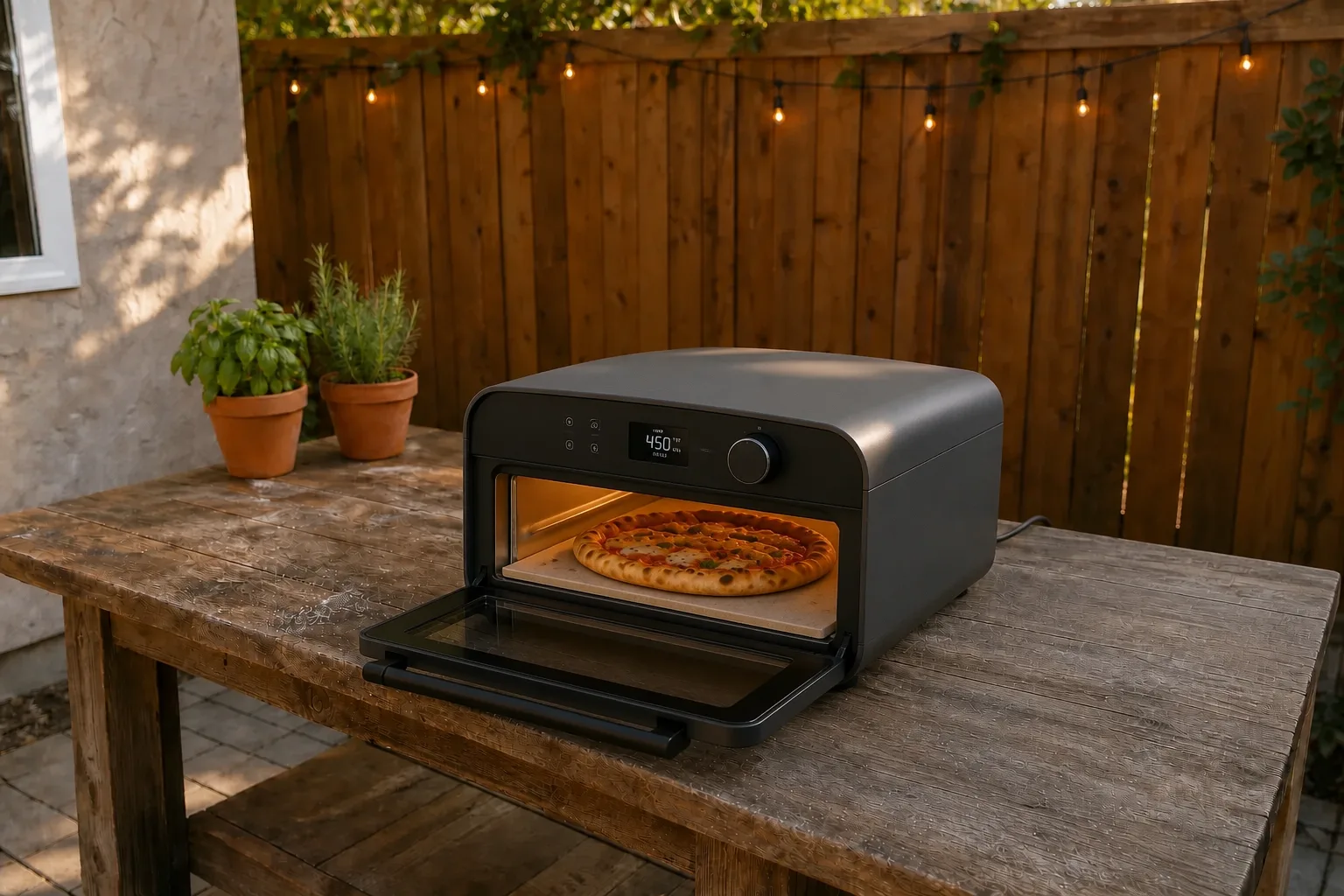
Indoor vs Outdoor Pizza Oven: Which Should You Buy? (2026)
Affiliate Disclosure
This page contains affiliate links. As an Amazon Associate, Pizza Oven Zen may earn a commission on qualifying purchases at no extra cost to you. Our reviews and recommendations are editorially independent.
The Big Difference: Heat
Outdoor pizza ovens burn wood, charcoal, gas, or pellets right in the cooking chamber, which lets them scream up to 900-950°F. That's hot enough to cook a pizza in about 60-90 seconds and gives you that puffy, charred, leopard-spotted crust you see in pizzeria photos. It's real fire, so it needs real ventilation — meaning outside.
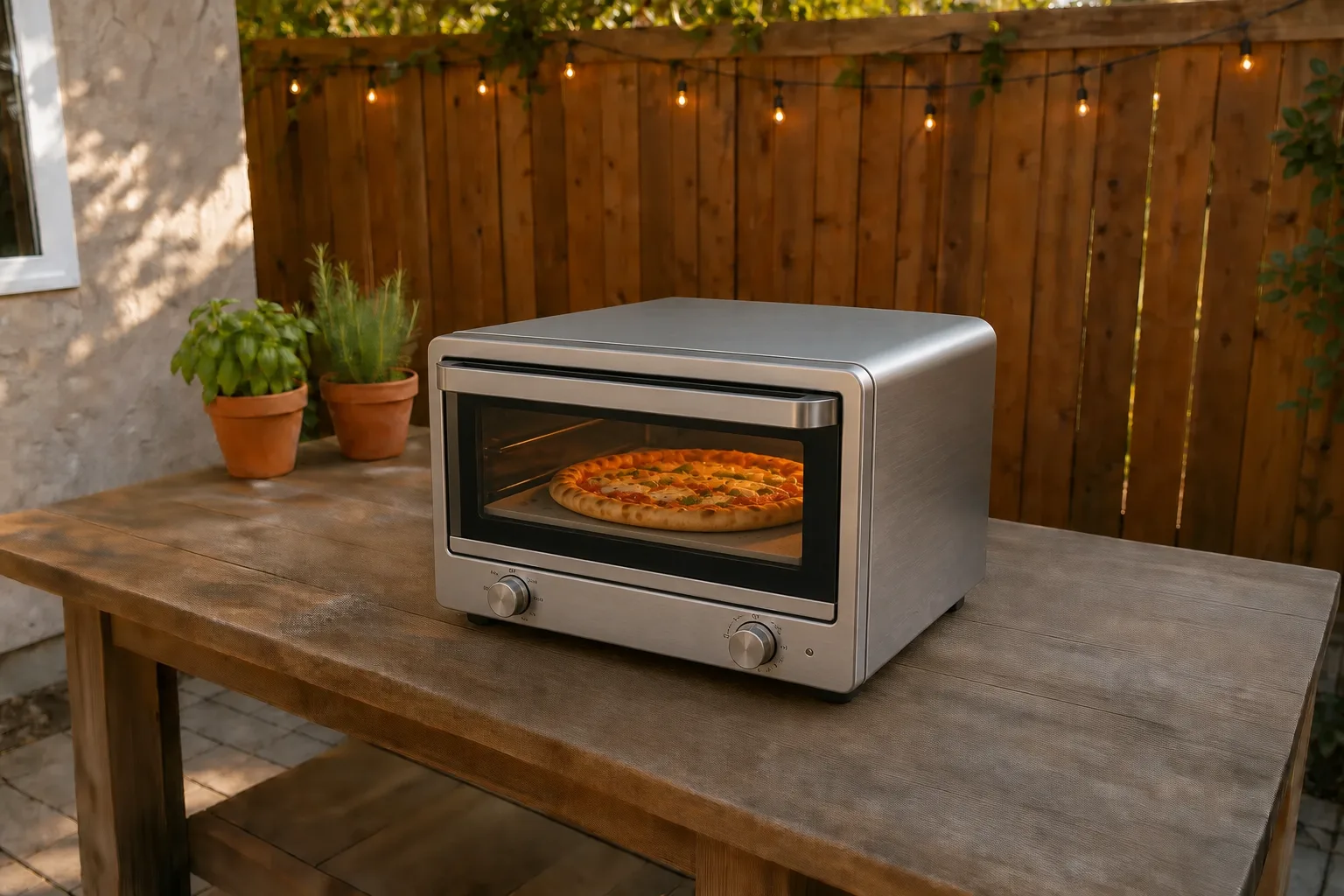
Indoor electric ovens plug into a wall outlet like a toaster, so they're limited to whatever a household circuit can push — usually landing around 650-750°F. That's still way hotter than your kitchen oven's 500-550°F ceiling, so you'll get a genuinely great pizza, just with a slightly longer 5-8 minute bake instead of a 60-second blast. Think excellent New York style rather than blistered Neapolitan.
Neither number is 'wrong' — they're just built for different pizzas. An indoor oven that ran at 950°F would need commercial-grade venting most homes don't have, so the electric ones wisely stay in a safe, plug-and-play range.
Weather, Space & Where They Live
Outdoor ovens need, well, outdoors — a patio, deck, or balcony with airflow, since they're burning something. Some fold up and store in a closet between uses; others are heavy enough to live permanently outside under a cover. Either way, wind and cold weather can make them a little fussier to get to full heat, so a sheltered spot helps a lot.
Indoor ovens live on your countertop, all year, in any weather. No propane tank, no wood pile, no waiting for a nice evening. If you're in an apartment, a cold climate, or you just want pizza during a thunderstorm, an indoor oven is the stress-free choice. It really is an indoor-pendent way to get your pizza fix.
One honest catch either way: both still make a mess of flour and cheese drips, so keep a damp towel handy regardless of where the oven lives.
Dad's Bottom Line
Go outdoor if you have a yard or patio and want the wow-factor of real fire and pizzeria-style char — the Ooni Koda 16 and Ooni Karu 12 are great starting points depending on your fuel preference. Go indoor if you rent, live somewhere cold half the year, or just want dead-simple weeknight pizza without stepping outside — the Ooni Volt 12 and Cuisinart Indoor Pizza Oven both handle that beautifully.
You genuinely can't make a bad choice here, only a choice that doesn't match your kitchen and your patience level. Answer honestly: do you want a show, or do you want dinner? Either way, you're one preheat away from a very good pizza.