Wood vs Gas Pizza Oven: Which One Should You Actually Buy?
Affiliate Disclosure
This page contains affiliate links. As an Amazon Associate, Pizza Oven Zen may earn a commission on qualifying purchases at no extra cost to you. Our reviews and recommendations are editorially independent.

The Quick Answer: Gas for Most People, Wood for Flavor-Chasers
Here's the short version, right up top. Buy a gas pizza oven if you're new to this, short on time, or just want great pizza with the least fuss. You turn a knob, wait about 15-20 minutes, and you're cooking. Buy a wood-fired oven if the fire itself is part of the fun for you — feeding the flames, smelling the smoke, making an evening of it.
Why do I steer beginners toward gas? Because the biggest reason pizza ovens end up gathering dust isn't the pizza — it's the hassle. A gas oven removes almost all of it. No wood to buy, no fire to babysit, no ash to sweep. When pizza night is easy, pizza night actually happens. That's the whole ballgame.
And here's a little secret from someone who owns both: at 900 degrees, a pizza cooks in about 60-90 seconds. That's not much time for smoke to soak in. The flavor difference between wood and gas is real, but it's smaller than the internet wants you to believe. I'd say wood and gas ovens are actually on pretty good terms — there's not much bad blood, just a little friendly heat between them.
Flavor: Does Wood Really Taste Better?
Yes — but only a little, and only if you run the fire well. A wood fire adds a gentle smoky edge to the crust, plus those pretty charred spots pizza folks call 'leopard spotting' (little dark freckles on the crust, which are a good thing, not a burnt thing). It's a lovely, subtle flavor. It is not a barbecue-level smoke bomb.
Here's the honest part: most of what makes pizzeria pizza taste amazing isn't the fuel at all. It's the heat. Any oven that hits 800-900 degrees — wood OR gas — gives you that crisp-outside, puffy-inside crust you can't get from a kitchen oven. The fuel is maybe 10 percent of the flavor story. The temperature is the other 90.
There's also a catch with wood: flavor has a skill tax. A badly managed wood fire — too smoky, too cool, too smoldery — makes worse pizza than a boring old gas flame. Your first few wood-fired nights will involve some trial and error. I call those early pies 'chef's snacks,' and honestly, I never knead an excuse to eat one.
Ease of Use: Gas Wins, and It's Not Close
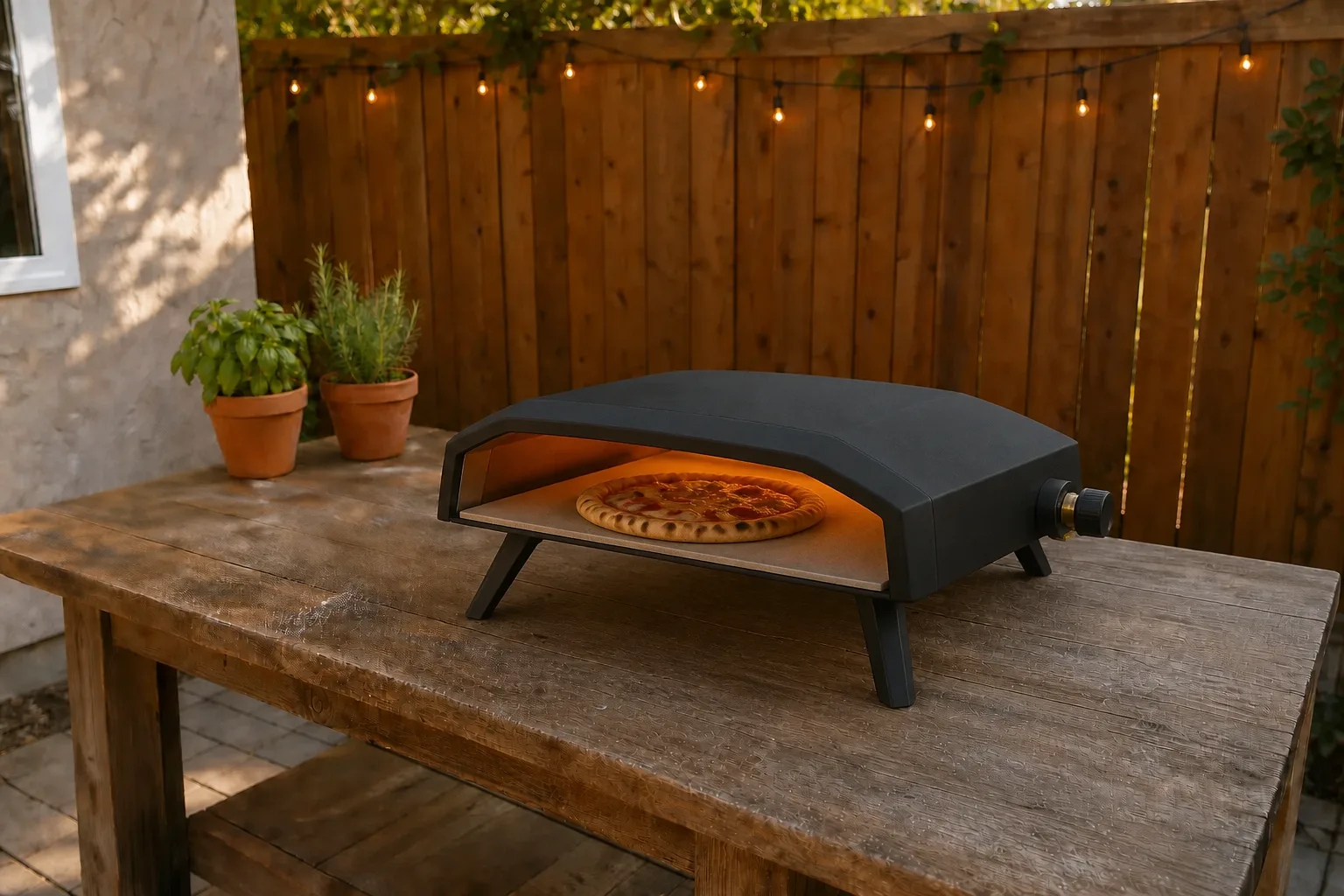
A gas oven works like a grill: connect a propane tank (the same kind your barbecue uses), turn the knob, and walk away for 15-20 minutes while it heats. While you cook, the flame stays steady all by itself. Your whole job is stretching dough and turning pizzas. That's it.
A wood oven is a small campfire with a roof. You build the fire, feed it small sticks of hardwood every few minutes, and wait 20-30 minutes for the stone — the thick baking floor inside that soaks up heat like a sponge — to get fully hot. Then, while you cook, you're managing two jobs at once: the pizza and the fire. Let the flame die down and your third pizza cooks slower than your first.
Neither one is hard, but they're different evenings. Gas is 'pizza on a Tuesday after work.' Wood is 'Saturday afternoon project with a drink in hand.' Be honest about which evening you'll actually have more often. If it's Tuesday, get gas. My gas oven never argues with me — it really knows how to keep things low-pressure. Well, medium-pressure. It's propane, after all.
Cost and Cleanup: The Boring Stuff That Decides It
Fuel costs are close enough that they shouldn't drive your decision. A propane tank lasts many, many pizza nights, and a bag of hardwood or oak splits isn't expensive either — though good dry hardwood can be annoying to find locally, and damp wood makes sad, smoky fires. Oven prices overlap too: both types come in beginner-friendly and fancy versions, so check the current price on Amazon for whichever model catches your eye rather than trusting any number you read in an article.
Cleanup is where the gap opens up. A gas oven basically cleans itself — the extreme heat burns off flour and drips, and you just brush the stone off once it's cool. A wood oven adds ash duty: every session leaves ash and charcoal bits that need scooping out once everything is fully cold. It's five extra minutes, but it's five extra minutes every single time.
There's also storage to think about. Gas needs a propane tank sitting somewhere. Wood needs a dry stash of fuel — wet wood is the enemy of a good fire. Neither is a dealbreaker, but wood asks a little more of your garage shelf. If you want the full chore rundown before you commit, our guide on how to clean a pizza oven walks through it — I promise it's a small ash to grind.
The Best-of-Both Answer: Multi-Fuel Ovens
If you're stuck at the crossroads, there's a third road: a multi-fuel oven. These burn wood out of the box and take an add-on gas burner (usually sold separately), so you can run gas on busy weeknights and wood when you've got time to play. The Ooni Karu 12 is the classic pick here, and its big brother the Karu 16 gives you the same trick with more room.
The honest downside: multi-fuel costs more once you add the gas burner, and the wood firebox on these smaller ovens is petite — you'll be feeding it little sticks pretty often. It's real wood fire, just in miniature. Think campfire, not fireplace.
Who should go multi-fuel? Someone who's pretty sure they'll want to experiment with wood but wants a safety net. That describes a lot of us, honestly. You get to fuel around and find out — and there's no wrong answer waiting to bite you.
So Which Should You Buy First? Dad's Decision Guide
Let's make this easy. Get GAS if: you're a first-timer, you want weeknight pizza, you have limited patience for setup and cleanup, or the fire part sounds like work instead of fun. Something like the Ooni Koda 16 or Gozney Roccbox will have you making pizzeria-level pies on night one. This is the right answer for most people reading this, and there's zero shame in it — the pizza is fantastic.
Get WOOD if: you already love tending fires, pizza night is an event at your house, and the process matters as much as the pizza. The ritual is genuinely wonderful — kids gathered around, that smell drifting over the fence, neighbors suddenly remembering they wanted to say hi. Just know it comes with a learning curve and a broom.
Get MULTI-FUEL if: you want gas convenience now and the wood option later. It's the 'why not both' answer, and it's a good one. Whatever you pick, the real secret ingredient is the same: a screaming-hot stone and a little practice. Your first pizza might come out a bit crusty — but give it time, it'll rise to the occasion. So will you.