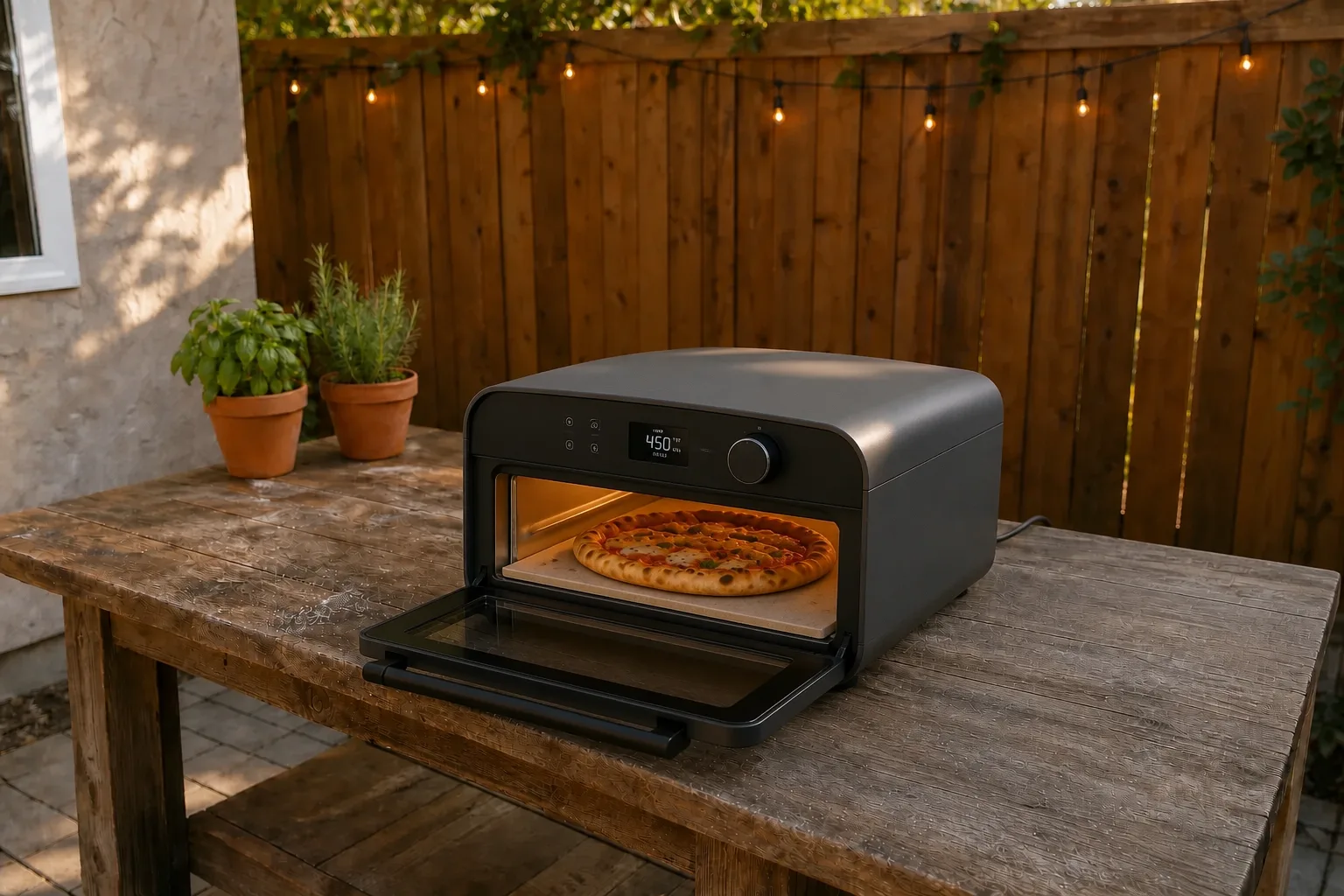
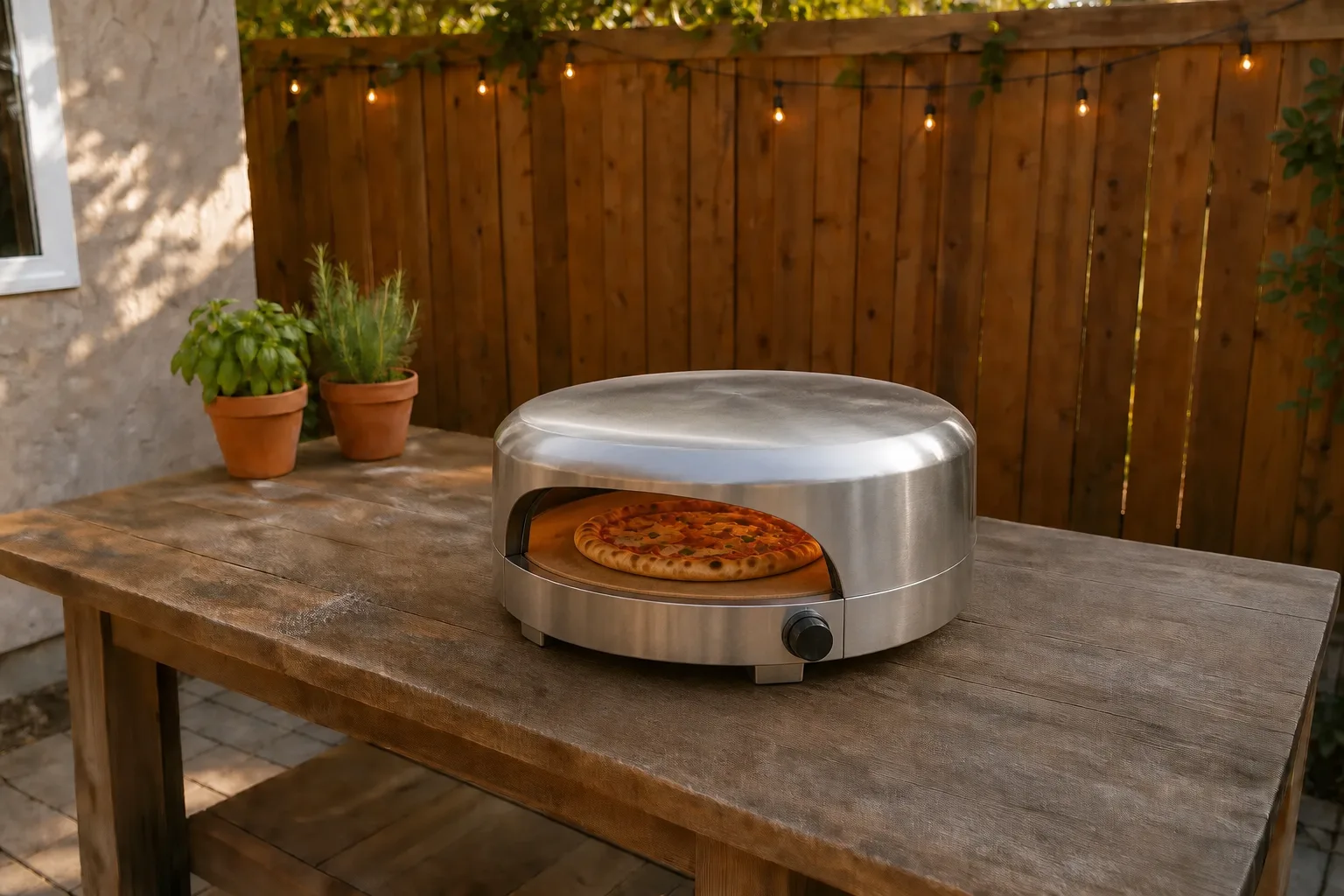
Can You Leave a Pizza Oven Outside in Winter? What Each Manufacturer Says
Affiliate Disclosure
This page contains affiliate links. As an Amazon Associate, Pizza Oven Zen may earn a commission on qualifying purchases at no extra cost to you. Our reviews and recommendations are editorially independent.
Winter and weather guidance by brand
| Oven | Leave it outside? | Cover and storage | Source |
|---|---|---|---|
| Ooni Koda 12 / Koda 16 (gas) | Not in harsh weather: manual says avoid snow, heavy rain, strong winds | Store indoors where possible if unused for long, but only with the gas cylinder disconnected; Ooni's carry cover is described as waterproof | Manual |
| Ooni Karu 16 (gas burner) | Same weather wording as the Koda | If stored indoors, detach the cylinder and leave it outdoors | Manual |
| Ooni Karu 12 / Fyra 12 | No weather rule in the manual | Let it cool at least 2 hours before covering; Ooni's blog says use its cover outside and bring the oven in before a big storm | Manual, blog |
| Ooni Volt 12 (electric) | Can be used outside | Manual says store indoors in dry conditions when not in use; never spray with a hose | Manual |
| Gozney Roccbox / Dome / Tread | Gozney says you can cook in winter | Blog suggests a shed or garage in very cold regions (the oven, not the propane); Gozney describes its covers as waterproof or weather-resistant | Blog, manuals |
| Solo Stove Pi Prime (propane) | No: do not expose to direct rain or snow | Indoor storage only with the cylinder disconnected and removed | Manual |
| Blackstone Patio Oven (1575) | Only if covered: strongly recommends a cover, especially in winter | Store dry; indoors only with the LP cylinder disconnected and stored outdoors | Manual |
| Camp Chef Italia Artisan | No rain or winter statement | Keep metal free of moisture, salts, acids, and harsh temperature swings | Manual |
Manual items are quoted from the printed instructions. Blog items are manufacturer advice, not manual requirements. No brand publishes a numeric minimum operating temperature.

The Stone Is the Weak Point
Pizza stones are porous. Ooni and Gozney both warn never to pour water on a hot stone, and Ooni's guide says to dry a washed stone before use (it suggests two hours in a 140°F kitchen oven). Solo Stove adds not to put extremely cold or frozen food on a hot stone.
A stone that soaks up rain and then freezes is asking for trouble. If snow is in the forecast, bring the stone inside or keep the whole oven under a cover. Our winter storage guide covers cleaning and drying before the season ends.
Cooking in the Cold
Ooni says its ovens work year-round. Its advice: brush snow off before cooking so it does not melt into the fuel basket, and plan on a longer preheat, roughly 15 to 30 minutes depending on fuel. Gozney recommends a low, slow first fire in very cold weather to avoid shocking the stone.
Gozney also warns that below freezing the gas could freeze, which can weaken the flame, and the Roccbox manual lists a cold gas cylinder as a cause of slow heat-up. Keeping the cylinder out of the wind helps. A winter pizza night is a little like a dad joke: it takes longer to warm up, but it lands.
Propane Never Goes Indoors
Ooni, Gozney, Solo Stove, Blackstone, and Camp Chef all say the same thing: keep the propane cylinder outdoors, upright, and out of reach of children, never in a house, garage, or other enclosed space. If you bring the oven inside for winter, disconnect the cylinder first. Gozney's shed-or-garage tip is for the oven only.
Do not store a spare cylinder under or next to the oven, and never fill a cylinder beyond 80 percent.