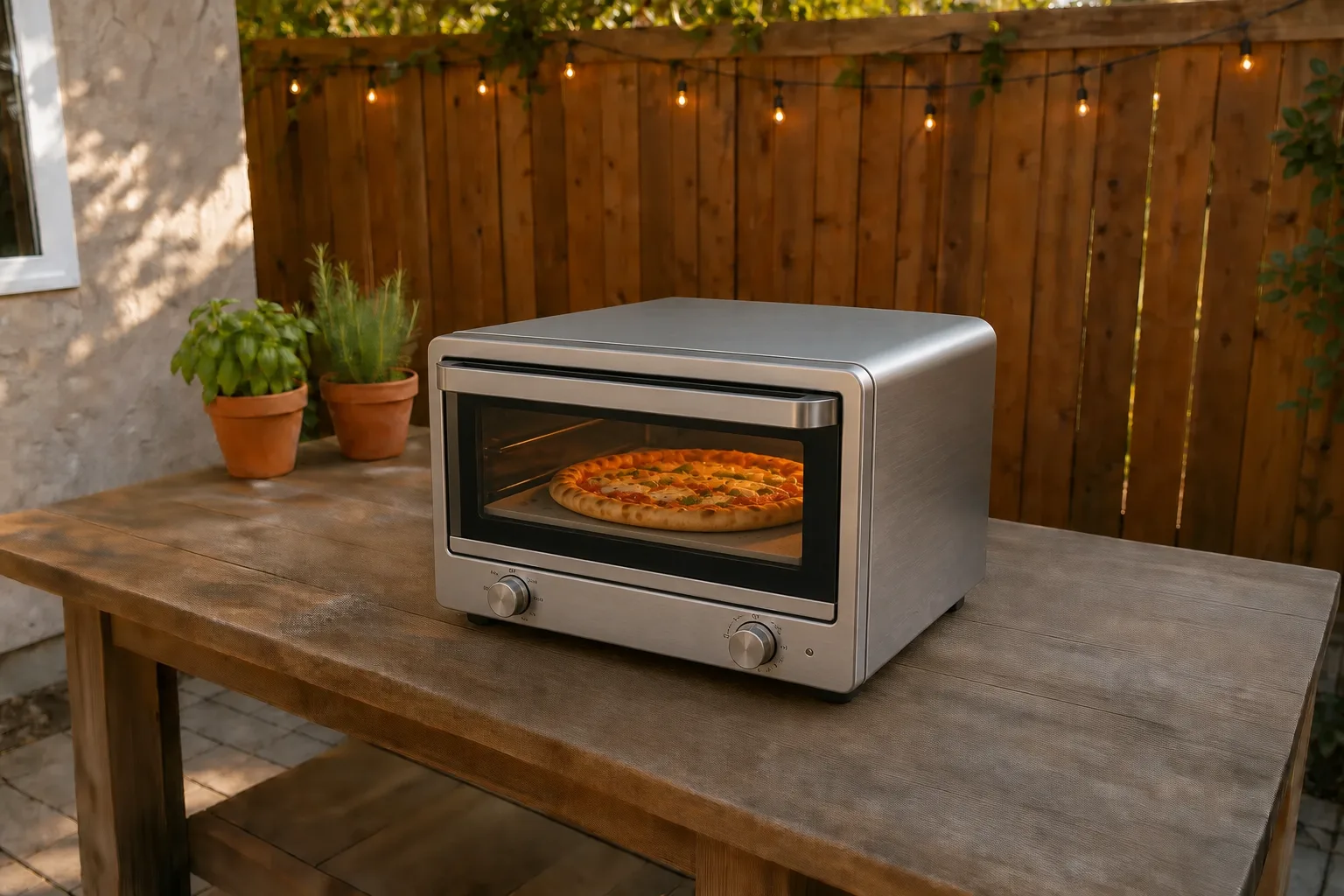
How Do Indoor Pizza Ovens Work? Electric Heat Explained
Affiliate Disclosure
This page contains affiliate links. As an Amazon Associate, Pizza Oven Zen may earn a commission on qualifying purchases at no extra cost to you. Our reviews and recommendations are editorially independent.
Breville · Breville Pizzaiolo
Why They Can't Match Outdoor Heat (and That's Okay)
A standard household outlet can only push so much power — typically capped around 1500-1800 watts for a plug-in appliance in North America. That ceiling limits how hot an electric oven can realistically get, which is why even the hottest indoor ovens top out well below what an open gas flame or wood fire can produce.
This isn't a design failure, it's physics. The tradeoff is real convenience: no propane tank, no wood, no outdoor space required, and a much smaller, faster-heating chamber than a full-size outdoor oven. You're giving up some peak heat in exchange for genuinely easy, year-round, indoor pizza.
Top and Bottom Heat: The Feature That Actually Matters
The single biggest difference between a mediocre indoor pizza oven and a great one is whether it heats from both above and below at the same time. A single-element oven (heat from below only, like most standard ovens) struggles to brown the top of a pizza before the bottom overcooks. Dual-element ovens hit the top and bottom independently, which is what lets a plug-in oven get anywhere close to a real pizzeria result.
This is the same reason the Breville Pizzaiolo can reach a genuine 750°F while most basic countertop ovens stay closer to 650-700°F — it's built specifically with strong, independently controlled top and bottom elements rather than a single general-purpose heating element doing double duty.
What to Actually Look For When Shopping
Max temperature matters, but only up to a point — the jump from 650°F to 750°F is a bigger deal than the jump from 750°F to 800°F, since you're chasing diminishing returns once you're already well above kitchen-oven heat. Style presets (Neapolitan, New York, frozen, pan) are genuinely useful for beginners, since they remove the guesswork of matching temperature to dough type.
Also think about where the oven will live: a fully indoor countertop model (like the Cuisinart Indoor) never leaves your kitchen, while some electric ovens (like the Ooni Volt line) are rated for both indoor and outdoor use, which matters if you want the flexibility of a balcony on nice days.
Last thing to check: how easy the stone is to clean. Flour and cheese drips happen with every oven, but a few indoor models have tight gaps around the stone near the heating element that make cleanup more of a chore than it should be — worth a quick check in reviews before you buy.